
Kushwaha
Kachchwaha(alsospelled as Kachavāhā ,Kachawaha, Kacchavahas, Kachhawa, Kuchhwaha, Kachhawaha, Kushwaha, Keshwala, Kacchapghata, Kush Bhawani, Kakutstha, and Kurma) are a Suryavanshi Kshatriya clan who ruled a number of kingdoms andprincely states in Indiasuch as Alwar, Maihar, Talcher, while the largest kingdom was Jaipur(Jainagara) which was founded by Maharaja Sawai Jai Singh II in 1727. The Maharaja of Jaipuris regarded as the head of the extended Kachwaha clan.
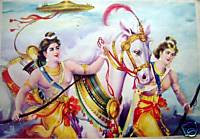
The Kushwaha (or Kauchhwaha) belong to the Suryavanshi lineage, descent from the Surya (Sun Dynasty) of the ancient Kshatriyas. Specifically, descent from Kusha younger of the twin sons of Rama, hero of the Ramayana, to whom patrilineal descent from Surya is in turn ascribed. Indeed, the name Kushwaha is held by many to be a patronymic derived from the name "Kusha". However, it has been suggested that Kushwaha is a diminutive of the Sanskrit conjoint word 'Kachhahap-ghata' or 'Tortoise-killer'; Tortoise in Sanskrit being Kashyapa, although there may be several connotations for the interpretation of these terms.
According to Vishnu Purana, bardic chronicles and popular tradition; Sumitra was the last king of this dynasty in Ayodhya. In the fourth century BC Mahapadma Nanda of Nanda Dynasty included Ayodhya in his empire and Kushwahas were forced to leave. Kurma was son of Sumitra thus migrated from their parental abode and established them self at the bank of the river Sone, where they constructed a fort called the Rohtas (Rahatas) fort.
T.H. Henley, states in his Rulers of India and the Chiefs of Rajputana (1897) that the Kushwaha clan is believed to have settled in an early era at Rohtas(Rahatas) on the Sone river in present-day Bihar. He notes however that their notable seats of power were Kutwar, Gwalior, Dubkhund, Simhapaniya and Narwar (Nalapura), all in present-day Madhya Pradesh. This second westwards migration to Madhaya Pradesh is said to have been initiated under Raja Nala, the legendary founder of Narwar.
James Tod, has recorded the view as being prevalent in his time, that the clan occupied Narwar in the 10th century and remained there until Narwar was captured by Parihara Rajputs in the 12th century, however local history suggests that the Kushwahas were in Narwar several centuries earlier than the date given by Tod's arbitrary view. Many historians aver that the Kacchapaghatas, like the Chandellas and Paramaras, originated as tributaries of the preceding powers of the region. They point out that it was only following the downfall, in the 8th-10th century, of Kannauj (the regional seat-of-power, following the break-up of Harsha's empire), that the Kacchapaghata state emerged as a principal power in the Chambal valley of present-day Madhya Pradesh. This view is largely supported by archaeological artefacts and Kacchapaghata coinage (minted in Gupta-fashion) discovered in Madya pradesh, as also by inscriptions of Gopasetra (Willis). It is interesting to note that according to popular legend, the rise of the Kachwahas in Madhya Pradesh is closely associated with Suraj/Surya Sen, a Kushwaha prince of the 8th century, whom is said to have been responsible for the building of Gwalior fort and the founding of that city. In the oldest section of Gwalior fort there still exists a sacred pond known as the Suraj-Kund It may thus be logical that the Kachwaha rule in Chambal valley predates the dates ascribed in the Sas-Bahu inscription.
Description
Kushwaha is a community of India and indian sub continent which is involved in agriculture and farming. It is found in large numbers in Uttar Pradesh, Bihar, Madhya Pradesh as well as in Nepal and Mauritius. Kushwaha claim decent from Shri Kusha, eldest son of Shri Rama . Large migrant populations have also settled in Bombay (Maharastra), Gujrat, WB, Delhi and Assam. Estimated population figures of Kushwaha are close to 5.00 - 6.00 crore in Northern India making it one of the largest groups in India comprising 8-10% of population in most states where they live. English descriptions of the various subgroups of Kushwaha are full of praise for their farming skills, industriousness and thrift.
Origins
Kushwaha generally claim decent from Maurya dynasty and Maurya Empire. Kushwaha claim linkages with the kingdoms of Kashi Kosala, Mauryas, Kushans, Shakyas and Kshatriya kingdoms in eastern India which survived well into 14-15 century. Great persons belonging to Kushwaha/Maurya/Shakya in ancient times were Shri Rama, Shri Kusha, 'Siddharth' Buddha, Chandragupta Maurya, Ashok Maurya, Raja Sagar and Brihdratha Maurya. Maurya empire was the first empire of India. It was a geographically extensive empire encompassing whole of Indian Subcontinent, parts of China and Central Asia. It's emperors, though sometimes demonised in Puranas claimed full divine rights and are subjects of study in Indian history. Though the English history places Mauryas between 320-100 BC, there are few sources for a much greater antiquity of Mauryas placing them much before these dates.
Current Status
Surnames specific to Kushwaha are: Kushwaha, Kushwah, Maurya, Shakya, Rana, Panjiara, Mehta, Mahato (apart from ubiquitous kumar, prasad and singh). However majority (~70-80%) use common surnames such as kumar, singh, verma etc. Kushwaha are found in all walks of life. Students may be found studying in Indian universities and working in private and public sector organisations.
Religion
Kushwaha are generally followers of Hinduism. In ancient times though they have followed popular religions of the times like Jainism and Buddhism. The important sects are 'Shaktivan' and 'Bhaktivan'. The main Gods and Godesses worshipped by Kushwaha are Shri Rama, Lakshaman, Sita, Hanuman etc.
There is a saying in the honour of Kachawa Rajputs-
कछवाहा री कीर्ती, सारी सदा सवाय l
जसधारी बणिया जगत, जय माता जमवाय ll
English version of this poetic phrase:
(The fame of Kachwaha is always a quarter more, They were famed in the world,I praise mother goddess Jamvay.)